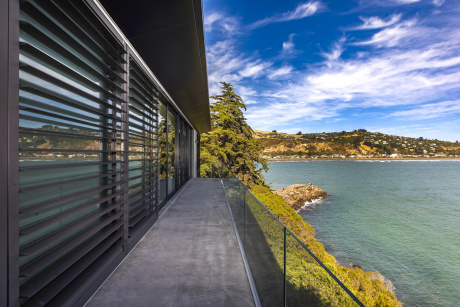
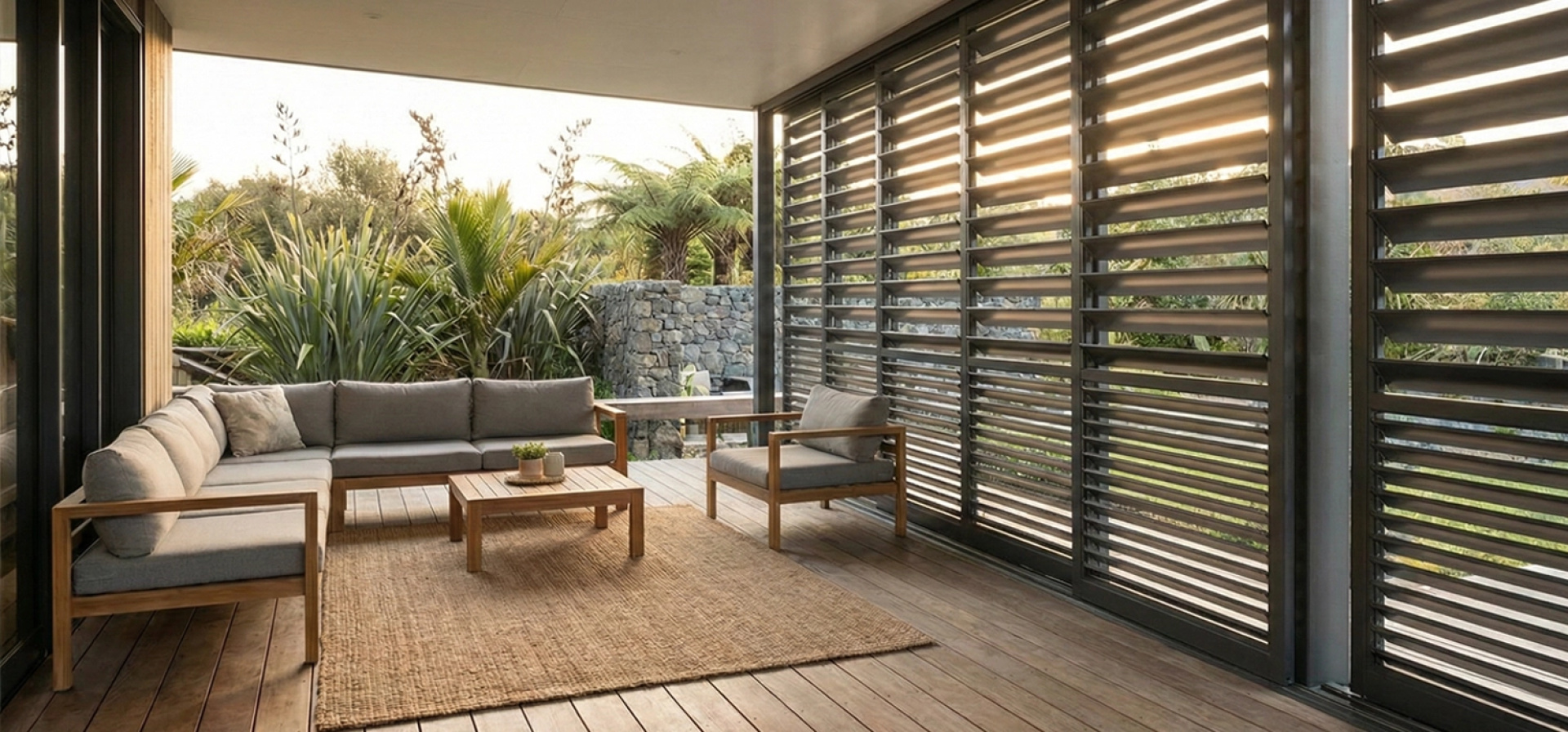
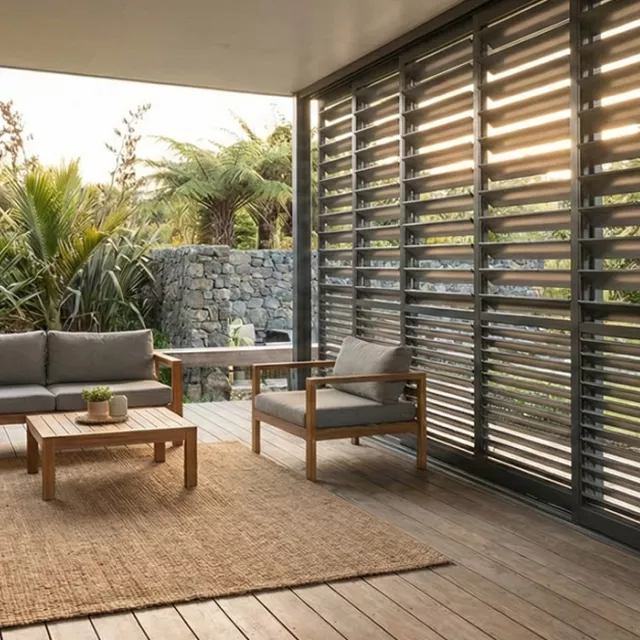
When people plan changes to their homes, comfort usually sits at the top of the list. They imagine sitting outside without harsh glare or letting a breeze through without feeling exposed. At this point, they often ask, what are the uses of louvres for? The question comes up because louvres fix everyday problems like strong sun, shifting wind, and privacy gaps.
Louvres work well because they handle several tasks at once. They shape shade and airflow, soften street views, and add clean lines to a home’s look. People use them in walls, screens, roofs, fences, and outdoor rooms to keep spaces usable through changing seasons. They also suit schools, offices, and retail sites where durable shade and cooler interiors matter. This guide explains the most practical ways louvres are used, so readers can match the right option to their space with confidence.
Louvres in One Minute: Shade, Air, and Sightlines
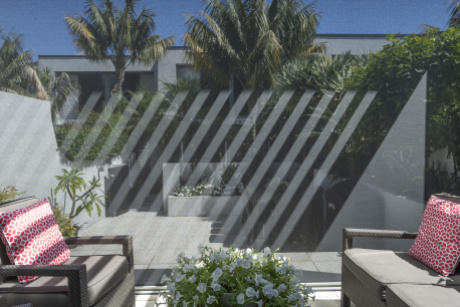
The simplest way to understand what are the uses of louvres for? It is to look at what they do immediately. Louvres block harsh light, let air move, and allow people to stay connected to what is around them without feeling exposed. The angled blades manage sunlight by softening glare during the brightest parts of the day. At the same time, airflow continues, which makes a noticeable difference when sitting outside on a warm afternoon.
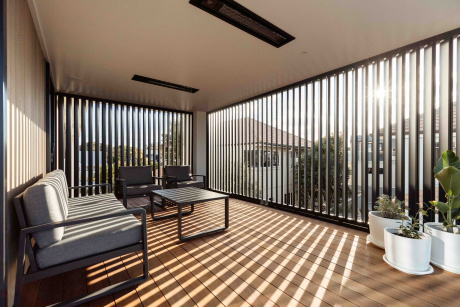
Some people prefer fixed louvres, especially when they want a clean, structured look. Others choose operable versions so they can follow the sun as it moves across the sky. Horizontal layouts feel relaxed and modern, while vertical ones suit narrow spaces or areas where privacy matters. Both help shape the way a space looks and feels.
Patios and Decks: Cooler Days and Softer Light
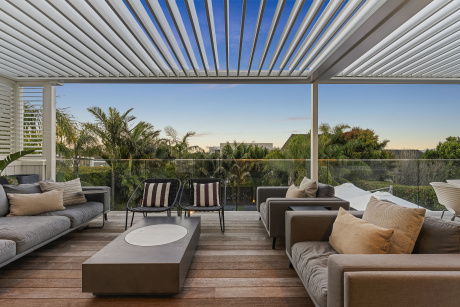
Many homeowners first encounter louvres when they want to enjoy their deck or patio for longer parts of the day. Direct sunlight can make a beautiful area too hot, while open spaces can feel too visible to neighbours. Louvres soften these issues in a simple, tidy way.

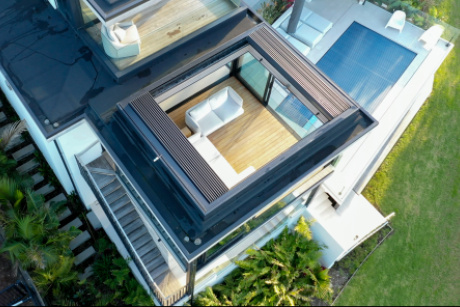
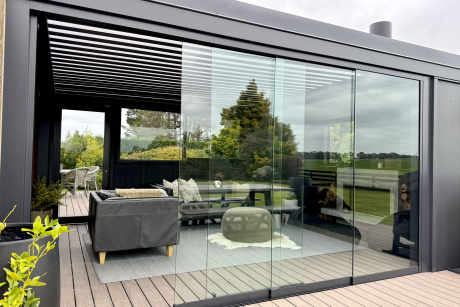
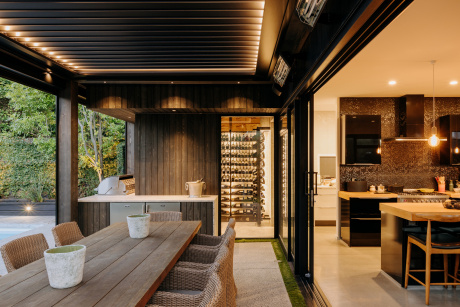
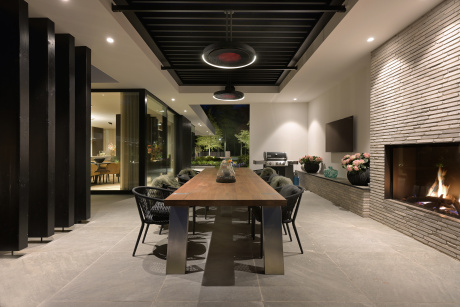
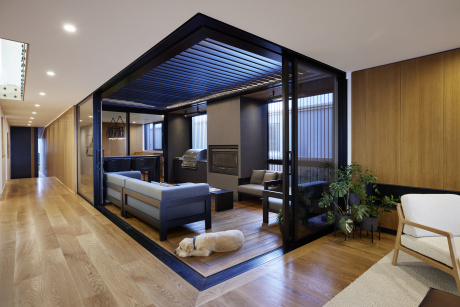
On patios, louvre walls create shaded edges without blocking airflow. Families often describe how the space feels calmer the moment the harsh light drops away. When paired with a louvre roof or a full Louvretec Room setup, the area becomes even easier to use through summer and mild winter days. With outdoor lighting, the same space remains inviting at night, making it a place where people feel safe to move around after sunset.
Homeowners looking for what louvres are used for in modern NZ homes often discover that patio use is one of the strongest reasons to include them, because the comfort level improves immediately.
Windows at Home: Privacy Without Heavy Curtains
Some rooms need fresh air, while others need daytime privacy. Bedrooms and street-front rooms often sit in this category. When homeowners ask, “What are the uses of louvres for?”, the answer often includes improved airflow and better privacy without blocking natural light. Louvres give a lighter, simpler option than heavy curtains, especially for people who want airflow without being visible from outside.
Slim louvre panels reduce unwanted glare without making the room feel dark. They are especially helpful in homes where the sun rises early and pours straight into the windows. Many homeowners who consider what are the uses of louvres for? also value how they balance light control with design appeal. Exterior louvres can be paired with wooden shutters inside, where the outer layer manages light and privacy, and the interior shutters add warmth and style. Together, they create a design that feels intentional rather than improvised.
Pool Areas: Breeze, Glare Control, and Safe Paths
Pools benefit from louvres in several ways. Shimmer and low sun can make it hard to see the water's edge, raising safety concerns, especially for children. Louvres reduce glare around the pool while still allowing light to move naturally. Their angled blades help the breeze flow through, cooling the area during warm days.

Because pools involve water, aluminium louvres with powder-coated finishes remain the most reliable choice. They withstand both moisture and coastal spray. When paired with low-glare outdoor lighting, they help guide safe movement after dark, reducing the chance of slips near the water. Families often say the pool zone feels calmer and more settled once shade and airflow are adequately balanced.
This zone also works well for louvres in the pool area for shading and privacy, as they prevent open views from neighbouring properties.
Building Facades for Offices and Schools: Workable Shade
In offices and schools, louvres focus more on energy control and comfort. Large windows are good for natural light, but they also bring heat. Louvres reduce that heat load, which keeps indoor temperatures more stable. Vertical blades help control low morning and afternoon sun, while horizontal blades work well on high sun angles.
Facility managers like them because they last, especially on busy sites where maintenance time is limited. They soften sunlight for people working near windows and help reduce glare on screens. For commercial projects, architectural louvre facades for NZ buildings are a common request, especially on buildings with long glass frontages.
Retail and Hospitality: Alfresco That Works Year-Round
Cafes, restaurants, and retail stores want outdoor areas to feel calm and inviting. Louvres help create small pockets of protected space where customers can enjoy fresh air without being buffeted by strong winds or exposed to direct sunlight. A consistent look also maintains a tidy brand presence.
Many venues combine louvres with retractable awnings, especially when showers come through quickly. This pairing works well because the louvres shape airflow and sightlines, while the awnings give fast, flexible cover. The benefits of combining retractable awnings and louvres become clear on sites where the weather changes suddenly, but businesses still want outdoor seating available.
Service routes stay open too, since louvres can be placed where they do not block walkways, prams, or trays.
Architectural Statement: Lines, Rhythm, and Depth
Beyond function, louvres also act as a design tool. They add depth and shadow to a facade, breaking up flat surfaces and adding interest. Many architects use repeating blade patterns to create rhythm across several levels of a building. A simple change in pitch can change how shadows fall during the day.
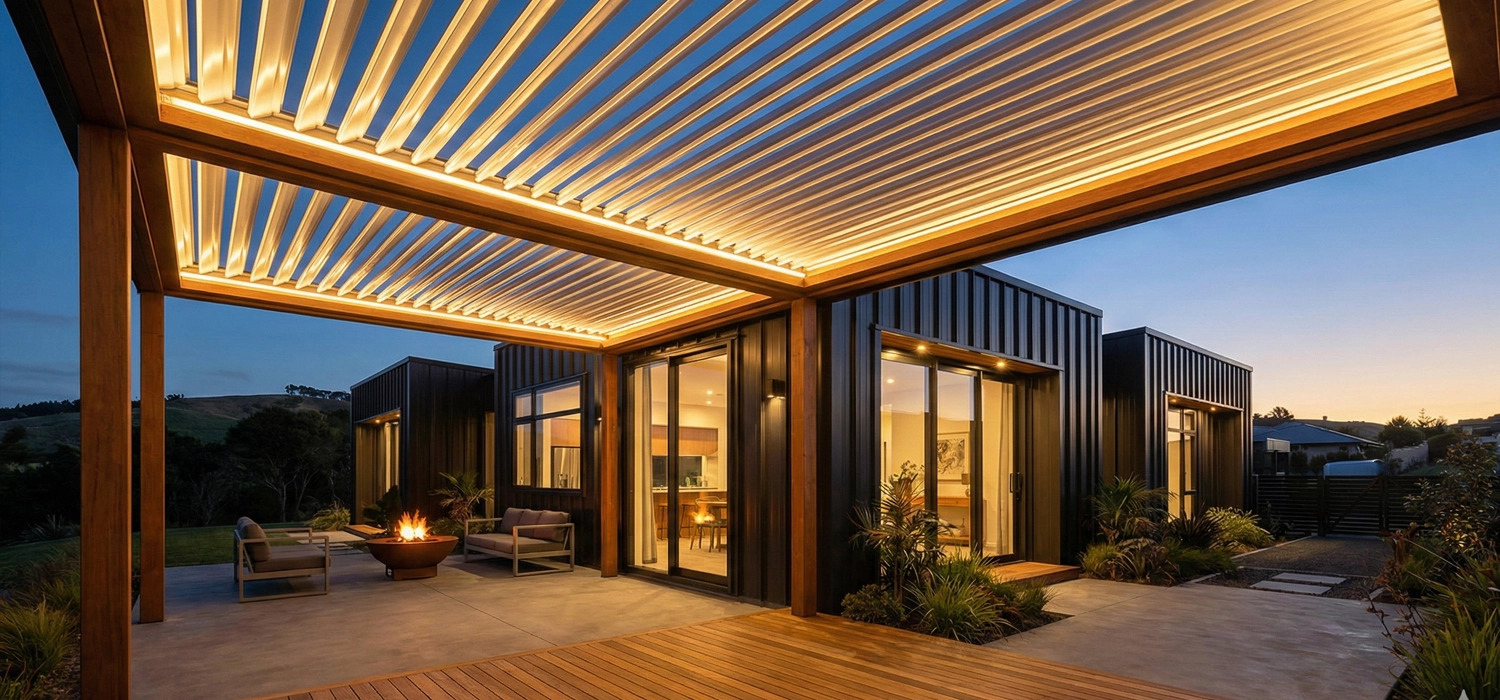
At night, outdoor lighting can highlight the form of the blades. This is where lighting design makes a difference, especially for homeowners who want their outdoor area to look finished and cared for. The combination of light and shadow adds quiet character to the home after dark.
Working With Outdoor Lighting: Safe and Calm After Dark
Outdoor lighting enhances any space with louvres. Louvres and lighting work well together because the blades gently diffuse the light, creating a soft glow rather than a harsh beam. People often appreciate how this makes their outdoor areas feel more inviting for evening meals or quiet time outside.
Lighting also improves safety. Steps, pathways, and door edges become easier to see, which helps prevent trips. Lights can be fitted to posts, fascias, or frames, depending on how the outdoor area is arranged. Many homeowners ask for integrating outdoor lighting into louvre roof systems when they want one clean design rather than separate add-ons.
Partnering With Wooden Shutters and Retractable Awnings
Louvres often form the exterior layer of protection, while wooden shutters add warmth inside. This pairing creates a comfortable balance of practicality and style, and it also answers the common question, What are the uses of louvres for? Wooden shutters offer privacy and a softer appearance, while the louvres outside do the heavy lifting for shade and airflow.
Retractable awnings can also be added for quick shade or shelter. They extend outward to block high sun and light rain, then retract when not required. When combined with louvres, the space becomes more flexible and comfortable through a wider range of weather conditions, which is another reason people ask, What are the uses of louvres for? Some homeowners look specifically for matching wooden shutters with exterior louvre design, especially when they want their home to look consistent across both indoor and outdoor areas.
Material Choices: Durability With Low Care
Choosing the right material helps louvres stay strong, look tidy, and require little effort through New Zealand’s changing weather. Here is a clear breakdown of the main options and what each one offers.
- Extruded aluminium (core material):
- Used for most outdoor louvres because it stays stable and does not warp in heat, rain, or damp coastal air.
- Handles wind and salt well, so it suits many NZ homes and commercial sites.
- Powder-coated aluminium (protective finish):
- Adds a durable outer layer that helps resist fading, surface wear, and everyday grime.
- Works well when homeowners want colours matched to joinery, cladding, or decks.
- Anodised aluminium (high exposure finish):
- Creates a hard, corrosion-resistant surface, which suits areas with strong sun or heavy sea spray.
- Often chosen for coastal builds where long-term colour and strength matter.
- Wood-look aluminium (style finish):
- Gives the warmth of timber without the upkeep.
- Avoids the swelling, cracking, or fading that untreated timber can develop over time.
- Simple wash routine (low-care support):
- Fresh water and mild detergent remove salt and dirt before they settle.
- Regular cleaning keeps the finish looking even and supports warranty conditions.
Taken together, these choices make louvres a reliable option for aluminium louvre solutions for coastal weather protection, where harsh conditions would otherwise shorten the life of outdoor structures.
Fixed or Operable: Manual or Motorised Control
Some spaces need simple privacy or screening. In these cases, fixed louvres work well because they stay in one set position with almost no maintenance. For areas that need daily control, operable louvres provide flexibility. They allow homeowners to adjust shade and airflow depending on the weather and time of day.
Motorisation can be added to wide or tall panels, making them easier to control. This is helpful on decks, balconies, and outdoor rooms where access to the top of the panel may be limited. It also pairs well with heating or blind systems to manage comfort across the seasons.
A popular request from homeowners is operable louvre walls for outdoor room climate control, especially when they want year-round comfort without closing the area off completely.
Quick Selector: Uses by Zone and Need
For readers wanting a fast guide, here are common uses of louvres by area:
- Patio privacy: Vertical screens with soft outdoor lighting.
- Sunny decks: Operable wall louvres paired with retractable awnings.
- Street-front office: Horizontal fins set to a fixed pitch for sun control.
- Pool edge: Corrosion-resistant louvres with low-glare path lights.
- Retail alfresco: Louvre screens plus clear openings for service flow.
Each setup answers a specific need, from controlling the sun to guiding airflow.
From Idea to Working Space
Homeowners and designers often start by asking what are the uses of louvres for? and end up discovering how wide their applications truly are. Louvres shape shade, privacy, airflow, and style. They work as well on family homes as they do on busy commercial buildings. When paired with outdoor lighting, wooden shutters, or retractable awnings, they support comfort across all seasons. For complete outdoor rooms, a full Louvretec Room ties roofs, walls, and doors together in one coordinated system, creating a space people use far more often.
Louvres stand out because they solve everyday problems simply and gracefully. When placed with care, they help homes feel calmer, workplaces feel more comfortable, and outdoor areas feel more inviting. With the right design choices, they become one of the most useful and durable features a building can have.