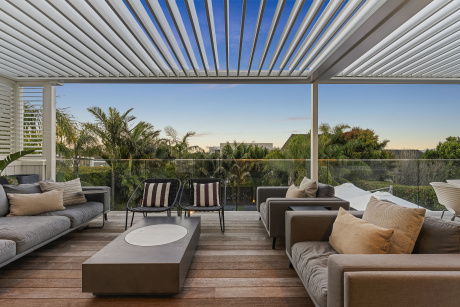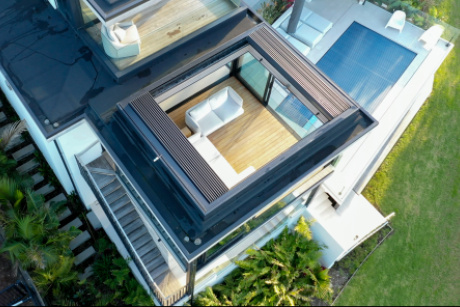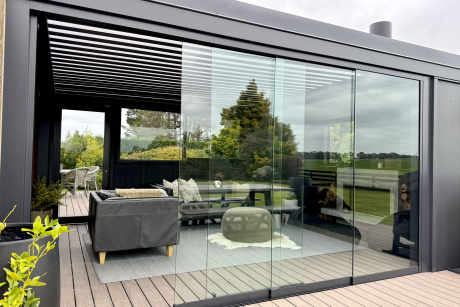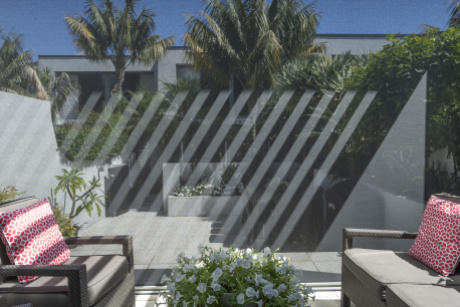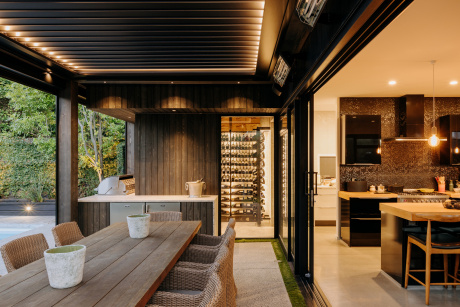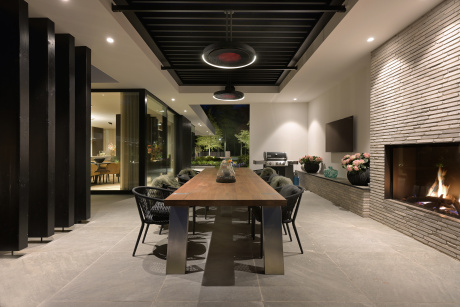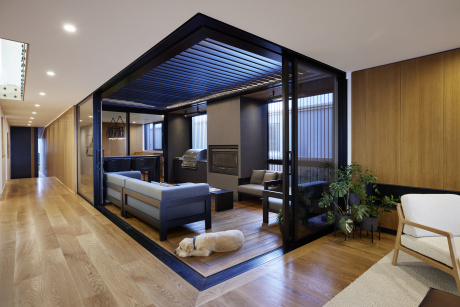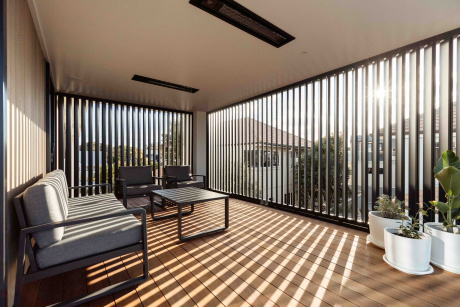
Opening roof comparison in NZ usually starts the same way. You've seen a few products online, maybe visited a showroom or two, and now you're trying to work out why some systems cost significantly more than others when they all look pretty similar at first glance.
They're not similar. Not when you look at what's inside the frame, how the roof is matched to your site, and what the system looks like five or ten years in. That gap between a well-engineered premium louvre roof and a standard imported product doesn't show up on day one. It shows up during Wellington's southerly season, at a coastal bach in the Coromandel, or on a wider-span deck where a cheaper system starts to flex and fatigue.
Here's what's worth comparing, and where Louvretec's NZ range holds a genuine advantage.
Why a louvre roof comparison matters in New Zealand
NZ conditions are harder on outdoor structures than most buyers realise. Coastal salt air accelerates surface breakdown. Alpine and high-wind zones demand structural engineering that a standard residential product simply wasn't designed to handle. And year-round weather variability means your roof isn't seasonal cover. It's a permanent part of the house.
Similar-looking systems can be engineered very differently underneath. You can't see operating mechanism quality, structural frame design, or wind zone suitability from a product photo. What you see is the blade shape and colour. What actually matters is what's holding those blades, how they pivot, and whether the whole system is matched to your site's specific exposure.
A louvre roof comparison in NZ that only looks at price and aesthetics misses most of the real comparison.
What NZ homeowners usually compare first, and what they should compare instead
While the upfront price is the easiest number to put in a spreadsheet, it’s also the least useful figure on its own. Two quotes for a motorised louvre roof in NZ can look similar on paper while hiding significant differences in blade thickness, motor placement, structural frame engineering, and whether the system was sized for your wind zone or just your deck dimensions.
What's harder to compare but matters more:
- Whether the roof model suits your span and wind exposure
- Whether the motor and mechanism are concealed or visible (this affects both appearance and protection from the elements)
- Whether the frame is engineered as part of the system or added separately
- How the finish and operation are expected to hold up over time
Our Opening Roofs are custom-made and engineered to each project's measurements and wind zone, rather than cut-to-fit from a catalogue.
Louvretec vs other louvre roof brands at a glance
| Feature | Louvretec | Standard / Imported Brands |
|---|---|---|
| Product range depth | Six opening roof models plus retract options | Typically one or two blade sizes |
| Roof models for different spans | Yes: 180/30, 200/35, 220/45, 200 Suburban, 270 Translucent | Usually one standard profile |
| Coastal / exposed site option | 220/45 Alpine, purpose-built | Often unspecified or same product |
| Wind-zone suitability | Site-specific model recommendation | Rarely addressed in product spec |
| Structural frame integration | Engineered aluminium frame system as standard option | Often customer-sourced or generic |
| Motor visibility | Concealed within the frame (Spiral Pivot system) | Frequently visible on top of frame |
| Operating mechanism | Award-winning Spiral Pivot system | Standard pin or visible drive system |
| Custom fit | Custom-made to exact requirements | Cut-to-fit from standard sizes |
| Aesthetic finish | Clean profile, no exposed mechanics | Varies: visible hardware common |
| Long-term performance focus | Site-matched specification from the start | Often appearance-first, site-second |
What makes Louvretec a premium louvre roof brand in NZ?
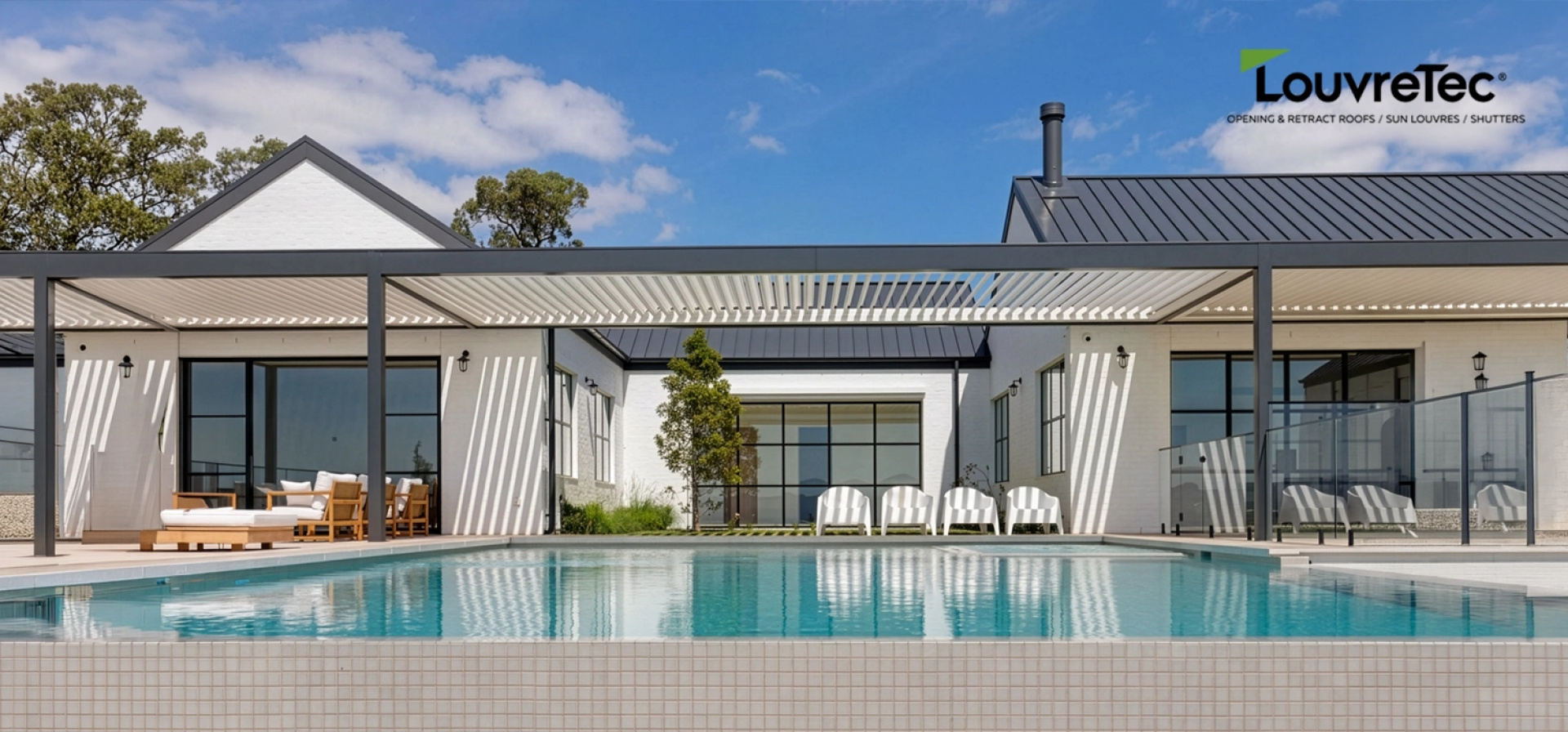
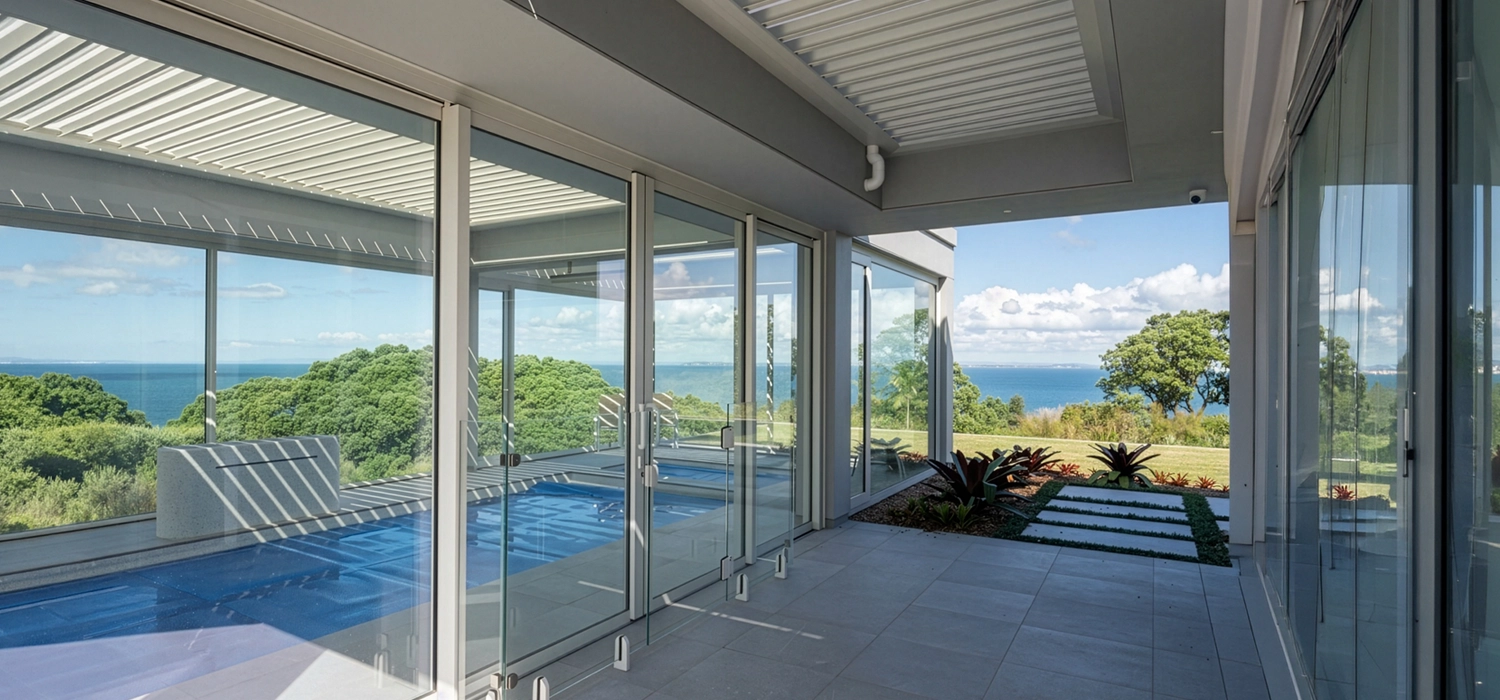
Our award-winning Spiral Pivot System is the mechanism that rotates the louvre blades up to 180 degrees. What sets it apart from a standard pin pivot isn't just the engineering; it's the fact that the motor, gearbox, and operating mechanism are all concealed within the frame. No exposed hardware, no visible motor housing sitting on top of your rafters.
That concealment keeps the underside of the roof visually clean and protects the mechanism from direct weather exposure. Both matter over time.
Louvretec vs standard opening roof brands on engineering and structural design
The frame is part of the solution
With many standard systems, the structural frame is something you sort out separately with your builder or from a generic supplier. Louvretec's Structural Frames are engineered specifically around their opening roof and louvre systems. The frame and roof are designed to work together, which means load paths, fixing points, and spanning requirements are all accounted for as a single system rather than figured out on site.
That matters most on larger spans, exposed sites, and projects where the frame needs to carry real structural load. A generic frame bolted to a roof product it wasn't designed for is a different engineering proposition than an integrated system.
Site-specific fit matters in NZ
Most standard brands lead with the product and work backwards to the site. Louvretec's approach runs the other way: span requirements, wind zone, and style are assessed first, then the appropriate roof model is recommended.
A supplier who recommends the same product regardless of your wind classification or deck span isn't doing a site assessment. The distinction is worth raising when you're comparing quotes.
Better range means better project matching
Our six distinct options for aluminium louvre roof systems in NZ mean there's a product engineered for your project type, not a standard profile adapted to fit. A slim courtyard roof, a wide-span suburban deck, and an exposed coastal site all have different structural requirements. Addressing them with the same blade is a compromise from the start.
Why Louvretec’s product range gives NZ homeowners more choice
Most buyers of louvre roof brands in NZ encounter offer one or two blade profiles and apply them to every project regardless of span, exposure, or design intent. That works until the project doesn't fit the standard profile, which in New Zealand happens more often than suppliers admit.
Louvretec's NZ range includes six distinct roof-opening options, each designed around a specific set of project requirements.
Smaller projects need slimmer roof profiles
The 180/30 Slimline Roof is designed for smaller opening roof projects and a minimalist aesthetic. Where a full-depth blade would feel heavy or disproportionate, the 30mm profile keeps things refined. It's a genuinely different product for a genuinely different project type, not just a scaled-down version of something larger.
Larger spans need stronger spanning options
The 200/35 Slimline Roof is Louvretec's go-to for medium to large opening roof projects where span is a primary consideration. Its structural capability means it can cover wider decks without requiring a double bay, which changes both the visual outcome and the overall project cost.
Harder sites need tougher roof choices
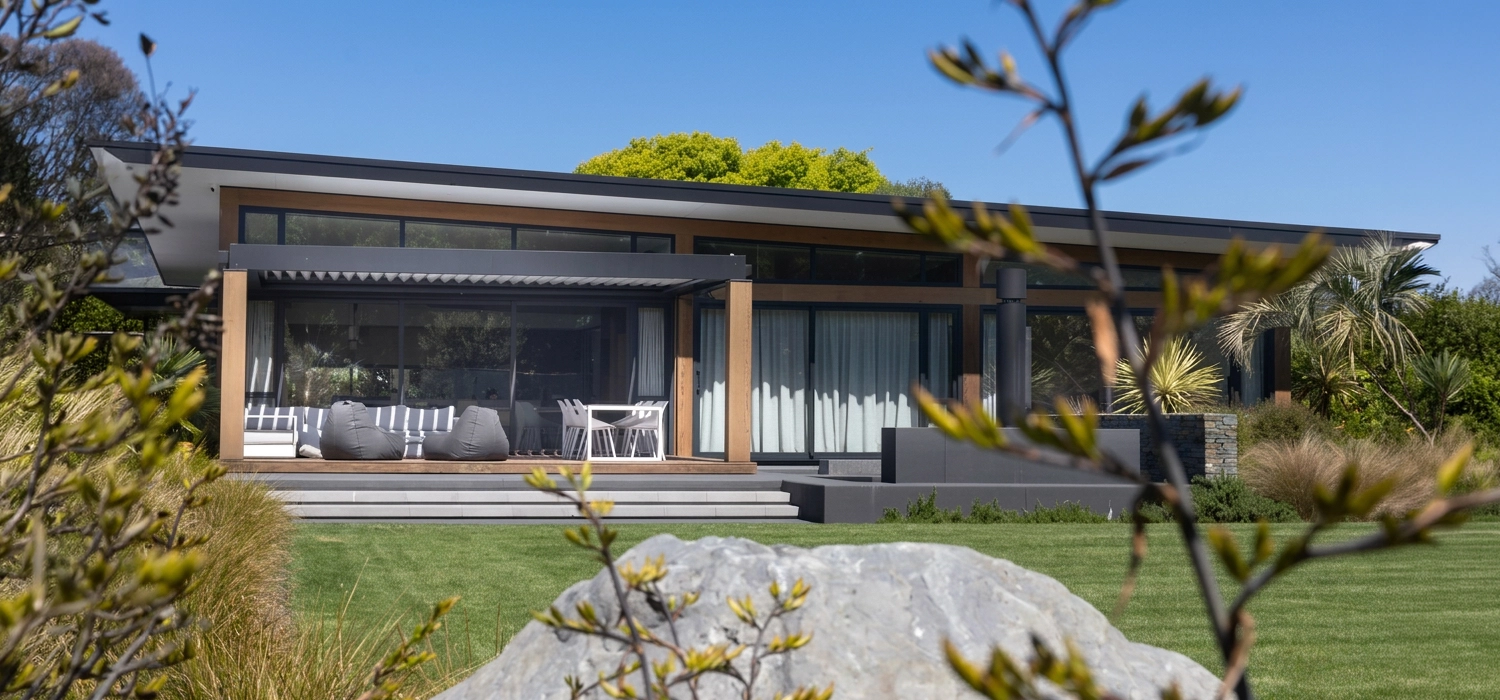
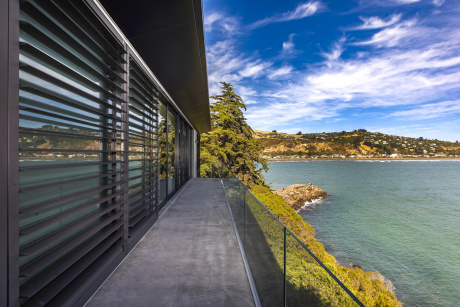
The 220/45 Alpine Roof is built for NZ's most demanding environments: coastal sites, alpine locations, and high-wind zones. The blade depth, structural design, and spanning capability are all calibrated for sites where a standard product would be undersized from day one.
Some spaces need more natural light
The 270 Translucent Roof addresses a real problem that a solid blade system can't solve: spaces that don't receive much direct light. When the roof is closed, a translucent blade lets diffused natural light through rather than creating a dark covered area.
The 200 Suburban is a well-specified, price-considered option for homeowners who want year-round outdoor use without the full premium specification. It features a subtle convex curve to the underside of each louvre and delivers genuine function at a practical price point.
Wall-attachment isn’t possible
The Solar Freestanding Roof is Louvretec's first solar-powered, freestanding opening roof (also available as a hand-operable option) for projects where a wall-attached structure isn't the right fit.
That breadth of choice matters for a custom louvre roof NZ project. An aluminium louvre roof system in NZ that's right for a sheltered Auckland courtyard isn't the right answer for a Hawke's Bay property facing north-west onto an exposed rural site. Having a model specifically engineered for each scenario is a different proposition from selecting from one blade profile in several colours.
Louvretec vs other brands on weather performance for NZ homes
Coastal sites need stronger specification
Salt air is aggressive. It attacks powder coatings, works into mechanical joints, and accelerates visible ageing in finishes not designed for marine exposure. For properties near the coast, the 220/45 Alpine Roof is Louvretec's recommended specification—not because it's the most expensive option, but because it's the one built to handle the environment.
A coastal louvre roof NZ project that starts with an undersized or general-use product is likely to show the difference within a few years. Staining, surface breakdown, and visible ageing happen faster when the finish spec wasn't matched to the exposure from the start.
High-wind zones change the buying decision
A high-wind louvre roof installation requires engineering that accounts for uplift, lateral loads, and structural fatigue over time. Louvretec explicitly positions the Alpine Roof for NZ's high-wind zones, which means the blade profile, spanning capability, and structural design have all been assessed with that environment in mind.
That's a meaningfully different conversation than a supplier who treats wind zone as a footnote in a disclaimer.
Year-round outdoor use depends on more than shelter
A custom louvre roof NZ project that combines a well-matched roof with the right frame and enclosing elements creates something more than a covered deck. The Louvretec Room concept reflects this: roof choice, frame choice, and side enclosures such as glass doors or outdoor blinds work together to produce a genuinely usable outdoor room in any season. That outcome depends on the components being specified together rather than assembled piecemeal.
Louvretec vs other brands on appearance and finish quality
A premium louvre roof should still look refined years later
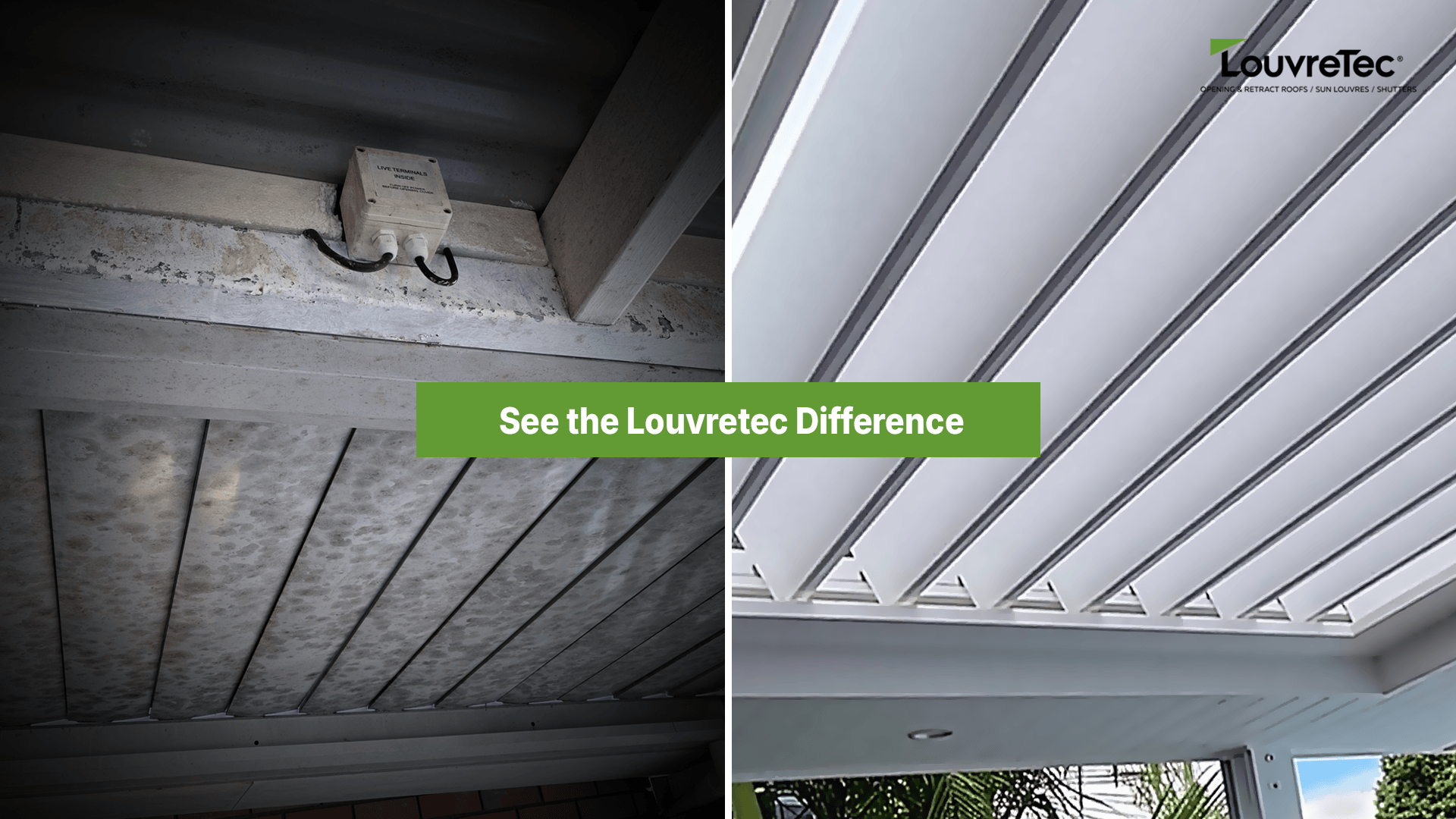
A premium opening roof system should still look considered and well-maintained years after installation. That's harder to guarantee with systems that have visible hardware, exposed motor housings, or a finish specification that wasn't suited to the site's exposure.
Concealed moving parts improve the visual result
Louvretec's concealed Spiral Pivot mechanism contributes to a cleaner visual result not just on day one, but over the life of the product. When moving parts are exposed to weather, UV, and salt air, they show it eventually. When they're protected inside an engineered frame, that ageing process is significantly slower.
Finish quality becomes more obvious with age and exposure
Lower-specification systems can develop visible staining, surface breakdown, or a tired appearance earlier than buyers expect. That's especially true in coastal or high-UV environments. It's also the kind of difference that's hard to spot in a product photo or a quote document, but very visible on a structure that's been in place for five years.
Which homeowners are most likely to notice the Louvretec difference?
Not every project needs the same level of specification, but certain buyers are more likely to see a clear return on a premium system.
- Homeowners in coastal or exposed locations, where site conditions are genuinely demanding and an undersized spec will show early-ageing or structural wear.
- Buyers comparing a wider span where the 200/35 Slimline's spanning capability might eliminate the need for a double bay, changing the structural and aesthetic outcome entirely.
- Design-conscious homeowners who want clean detailing and no visible hardware, and who'll notice the difference between a concealed mechanism and an exposed one.
- Long-term investors who understand that a lower first quote and better long-term value aren't always pointing at the same product.
Long-term value: what a premium louvre roof really buys you
A lower first quote and better long-term value are not the same thing.
The cost difference between a well-specified premium louvre roof and a standard system is often smaller than buyers expect relative to the overall project cost. Deck construction, consents, landscaping, and enclosing elements typically account for the bulk of the spend. The roof itself is a smaller percentage of the total than most people assume.
What the premium specification actually buys is confidence: that the system was engineered for the site, that the operating mechanism won't show visible wear in three years, and that the finish spec was suited to the environment. For the best louvre roof for New Zealand homes, that comparison runs over time—and it's one that a first quote rarely captures.
FAQs
What is the best louvre roof brand in New Zealand?
Louvretec is widely regarded as the leading engineered opening roof brand in NZ, with a 26-year history and a range that includes purpose-built options for coastal, alpine, and high-wind locations. A good test: ask each brand how they'd match a product to your specific wind zone and span. The quality of that answer tells you a lot.
What makes a premium louvre roof different?
Engineering depth and site-specific fit. A premium system typically uses a concealed operating mechanism, a structural frame designed as part of the roof system, and distinct product models for different spans and exposures, rather than one blade profile adapted to every project.
Are all opening roofs suitable for coastal NZ homes?
No. Coastal environments need a higher finish specification and, often, a blade profile with greater structural capability. Louvretec's 220/45 Alpine Roof is their specific recommendation for coastal and high-wind NZ sites. A general-use product installed at a coastal property is likely to show premature ageing in the finish and mechanism.
What should I compare when choosing a louvre roof brand?
Beyond price: wind zone suitability, whether the product was engineered for your span, motor and mechanism placement, structural frame design, and how the system is expected to perform in your specific environment. A site-matched recommendation is a better buying signal than a catalogue price.
Is a premium louvre roof worth it?
For most homeowners in coastal, exposed, or design-conscious applications, yes. The cost difference between a well-specified system and a standard product is usually modest relative to the overall project cost, and the difference in long-term performance is significant.
How do I compare louvre roof systems for wind zone and span?
Ask each supplier which specific product they recommend for your site and why. A quality outdoor louvre roof comparison includes your wind zone classification, span, and any site-specific factors such as coastal exposure or alpine conditions. If a supplier offers the same product regardless of those variables, that's worth noting.
Get a site-specific recommendation today!
If you're working through a louvre roof comparison in NZ and want to understand which system suits your site's wind exposure, span, and design intent, Louvretec can provide a site-specific recommendation.
Find your nearest Louvretec dealer or enquire with us today.