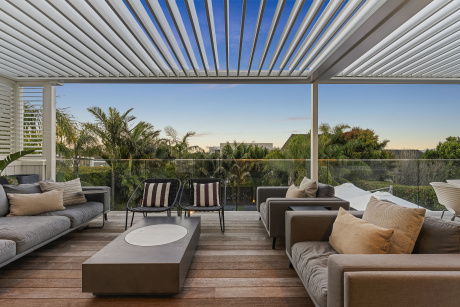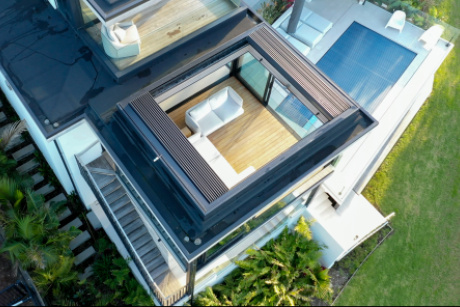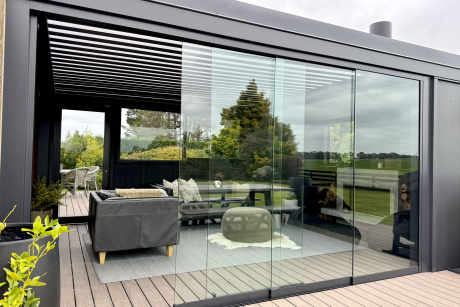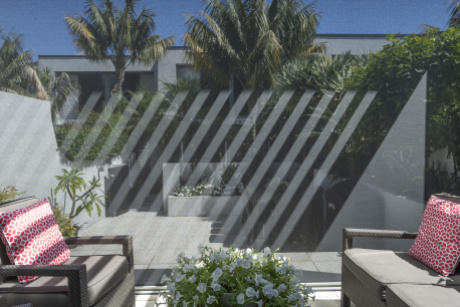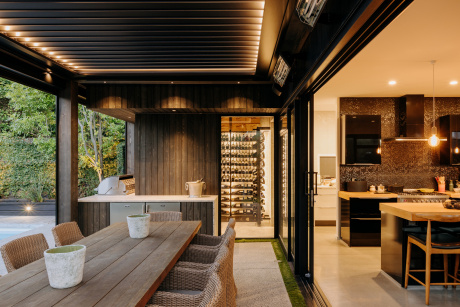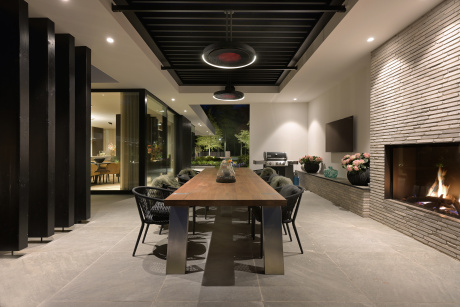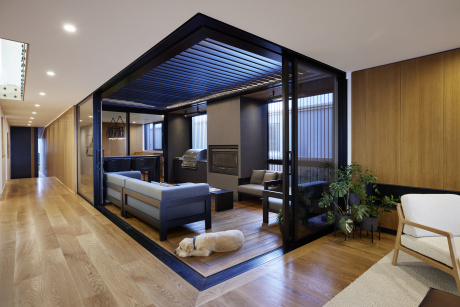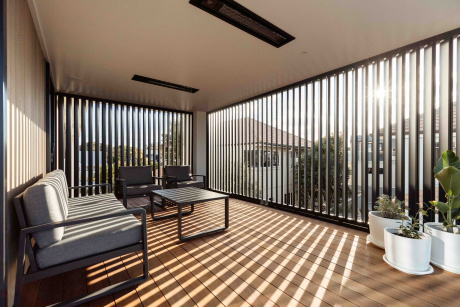
Standing on a chilly deck trying to figure out whether you need a radiant heater or an infrared one is a bit like asking whether you need a fridge or a refrigerator.
The short answer on the electric radiant vs infrared outdoor heating debate is that they’re mostly the same, but the real decision, the one that actually affects your comfort on those cold evenings, comes down to sizing and where the heater’s placed. This guide walks you through both.
What’s the Difference?
Most outdoor heaters sold as “radiant” and “infrared” work in the same way: they warm you directly rather than heating the air around you. The split in terminology comes from the heating element inside, not the underlying technology. Either way, the goal stays the same: turning your deck into a proper outdoor room, even in winter.
How Electric Radiant Heaters Work
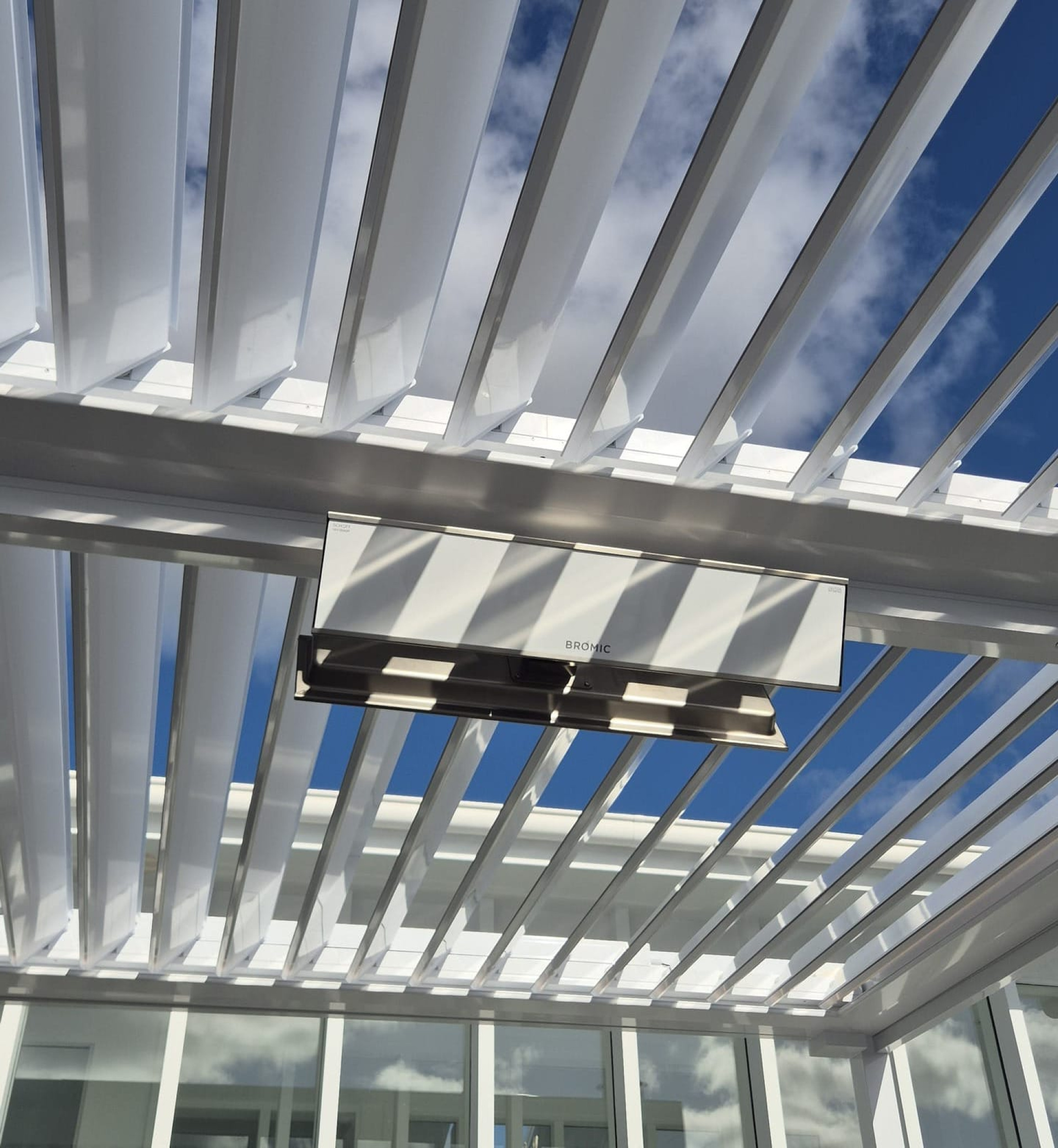
An electric radiant heater uses a heating element, usually behind a reflector, to emit heat in a specific direction. Electric radiant heaters are what you'll see mounted on a deck ceiling or wall, angled toward where people sit, for that even, comfortable warmth you want when you're entertaining or just sitting out longer than you planned. Louvretec recommends Bromic Heaters.
- Heat comes from a heated element, shaped and directed by a reflector
- Reflector design determines whether heat focuses tightly or spreads across a wider zone
- Common mounting styles: wall, ceiling, or recessed
The reflector matters as much as the element. It’s what shapes the heat into a focused zone instead of scattering it uselessly upwards or sideways.
How Infrared Heaters Work
Infrared heaters describe the same principle from a different angle: the heat travels as infrared light, the same invisible energy you’d feel standing in direct sun. It warms your skin and any solid surface in its path, not the air in between!
- Heat travels as infrared light, reaching people and surfaces directly
- Less affected by wind than fan or convection heating, since there’s no warm air to carry off
- Works well in covered or semi-covered outdoor spaces without needing ventilation
That’s why wind matters less to infrared than it does to fan or convection heating, because there’s no warm air for a breeze to carry. The heat’s already landed on you by the time the wind gets a say.
In practice, when you're comparing products for a covered deck, you're not choosing between two rival technologies. You're choosing between element types (carbon fibre, quartz, halogen) and mounting styles, which are what actually change your day-to-day experience and how the finished space looks and feels.
Which is the Best Outdoor Heater for Patios in NZ?
There’s no single best outdoor heater for patios in NZ although Louvretec does recommend Bromic Heaters.; it all depends on your deck, your ceiling height, and how much you want the heater to disappear into the space rather than announce itself.
- Wall-Mounted: Suits a deck with limited ceiling clearance, or when you want heat directed at a specific seating zone rather than spread evenly overhead.
- Ceiling-Mounted: Works well under an opening roof, spreading heat down and across the space below rather than at a single fixed point.
- Recessed: A recessed outdoor heater for a covered deck is the ideal option to choose if you want a flush, architectural finish, particularly under a solid or louvre roof where a protruding fixture would interrupt the line.
If lighting’s part of the plan too, Bromic’s Eclipse Smart-Heat™ Pendant Heater brings warmth and light together in one fitting, with a built-in LED ring. It’s a useful option if you’re finishing an outdoor room and don’t want a separate lighting decision on top of the heating one.
For anything near the coast, the Platinum Smart-Heat™ Electric Marine series is worth a look too, designed for that kind of exposure without compromising on the finish.
Outdoor Heater Coverage Sizing for NZ Decks
Getting the size right matters more than which brand or model you land on. Too small, and you’re left with a warm patch in the middle of a cold deck. Too large, and you’re paying to heat air nobody’s sitting in.
Calculating Wattage Per Square Metre
As a general guide for outdoor heater coverage sizing for an NZ deck, the wattage you need per square metre changes depending on how enclosed the space is:
- Covered Deck (solid roof, at least one wall or windbreak): Roughly 100–150 W per m².
- Semi-Covered Deck (roof, but largely open sides): Roughly 200–300 W per m².
- Fully Exposed Deck (no roof, no walls): Roughly 300–400 W per m².
Multiply your deck’s floor area by the figure that matches your setup, and you’ve got a rough total wattage to aim for.
Factors that Affect Coverage
The wattage guide is a starting point, not a guarantee, because a few things shift the numbers either way:
- Wind Exposure: A breezy corner site needs more consideration than a sheltered courtyard, even under the same roof type.
- Mounting Height: Heaters mounted too high lose intensity before the heat reaches you.
- Regional Climate: A deck in Queenstown is working harder than one in Auckland, even at the same size.
If you’re not sure which end of a range applies to your deck, it’s worth a quick chat with your local Louvretec dealer before committing to a wattage.
Placement Tips for Even Heat Distribution
Sizing gets you the right amount of heat. Placement determines whether it actually reaches the people beneath it.
- Mounting Height: Most residential setups generally sit between 2.4m and 3m. Too high, and the heat spreads thin before it reaches anyone. Check the manufacturer’s guidance for your specific model.
- Angle: Keep it fairly direct. Past 30 degrees, heat spreads wider but is weaker, which is fine for ambient warmth but not ideal over a dining table.
- Clearance: Keep outdoor furniture covers, umbrellas, and plants clear of the heater. Maximum distances vary by wattage and model, so always check the spec sheet.
- Spacing Between Heaters: If you’re using more than one heater, overlap the coverage slightly rather than leaving a cold gap between them.
A Louvretec dealer will walk your actual deck and confirm placement before anything’s installed. That way, you’re not relying on a general rule for a space that has its own little quirks.
Frequently Asked Questions
Are electric radiant and infrared heaters the same thing?
Largely, yes. Most electric outdoor heaters use infrared elements to warm people and surfaces directly. The differences that actually matter come down to element type (carbon fibre, quartz, halogen) and mounting style, not the underlying “radiant vs infrared” label.
How many heaters does a typical covered deck need?
It depends on the size and layout of your outdoor space, but a single heater usually suits a smaller covered deck comfortably. Larger decks or open-plan spaces often work better with two heaters positioned to overlap coverage, rather than one large unit trying to reach every corner.
Can a heater be recessed into a louvre roof?
A recessed outdoor heater for a covered deck sits flush with the ceiling, which suits a louvre roof particularly well since there’s no fixture interrupting the line of the roof or the louvre blades above it. However, it does need to be planned at the design stage, since the ceiling has to be built around it.
Do outdoor heaters still work if the deck gets some wind?
Yes, within reason. Infrared heat reaches people and surfaces directly, so a breeze doesn’t strip the warmth away the way it would with fan or convection heating. A fully exposed, consistently windy site will need a higher wattage to compensate, but a little bit of airflow under a covered deck won’t be a problem.
Choosing the Right Heater for Your Outdoor Space
There’s no one right answer here, and that’s the point. Whichever way you lean on the electric radiant vs infrared outdoor heating question, a wall-mounted heater in a sheltered courtyard needs different sizing than a recessed unit under an opening roof exposed to a coastal breeze.
Getting it right means matching wattage, mounting, and placement to your actual deck, not a generic figure from a spec sheet. A local Louvretec dealer can assess your space, factoring in your region and roof style, and recommend a solution that suits the practical side and the finish you’re after. If you’re ready to talk it through, enquire today or give us a call.