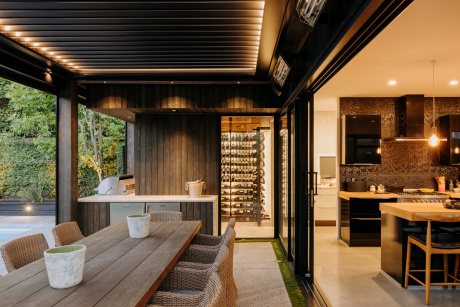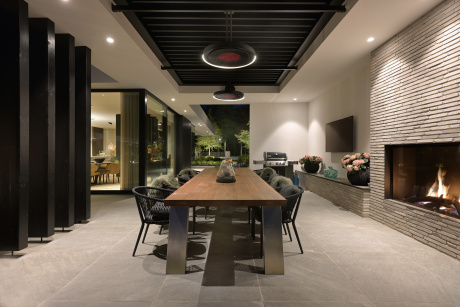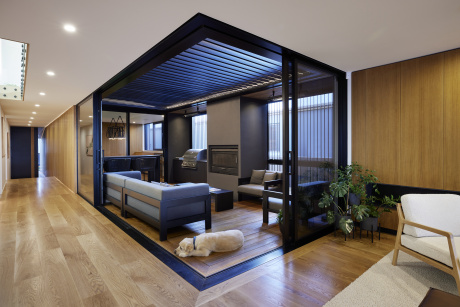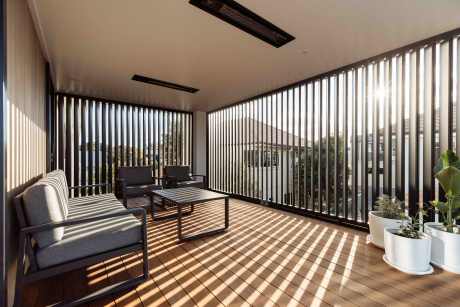
If you're renovating or building and trying to decide on Louvre Bifolding Doors vs Sliding Louvre Doors, you've probably noticed that most online advice just describes both options, leaving you to figure out the rest.
Both types of doors open up your living space, flood a room with natural light, and make the move between indoors and outdoors feel effortless. But they work in different ways, suit different spaces, and come with trade-offs worth knowing before you commit to an option.
In this guide, we’ll break down exactly how each door type works, weigh up the pros and cons, and give you a clear way to decide which one fits your home. By the end, you’ll have a clear idea of what to consider before choosing a door for your project.
Sliding Louvre Doors vs Bifold Doors: What's the Actual Difference?
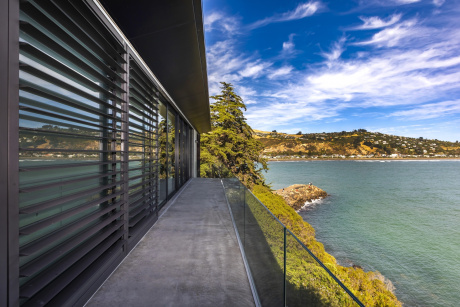
Sliding Louvre Doors and bifold doors create an opening between indoor and outdoor spaces, and both feature adjustable Louvre infills, but they do it in completely different ways.
A Sliding Louvre Door works exactly how it sounds. One or more panels with Louvre infills sit on a track and slide horizontally, running behind or alongside a fixed panel. Because the panels overlap rather than fold away, a sliding door typically opens to around half or two-thirds of its total width.
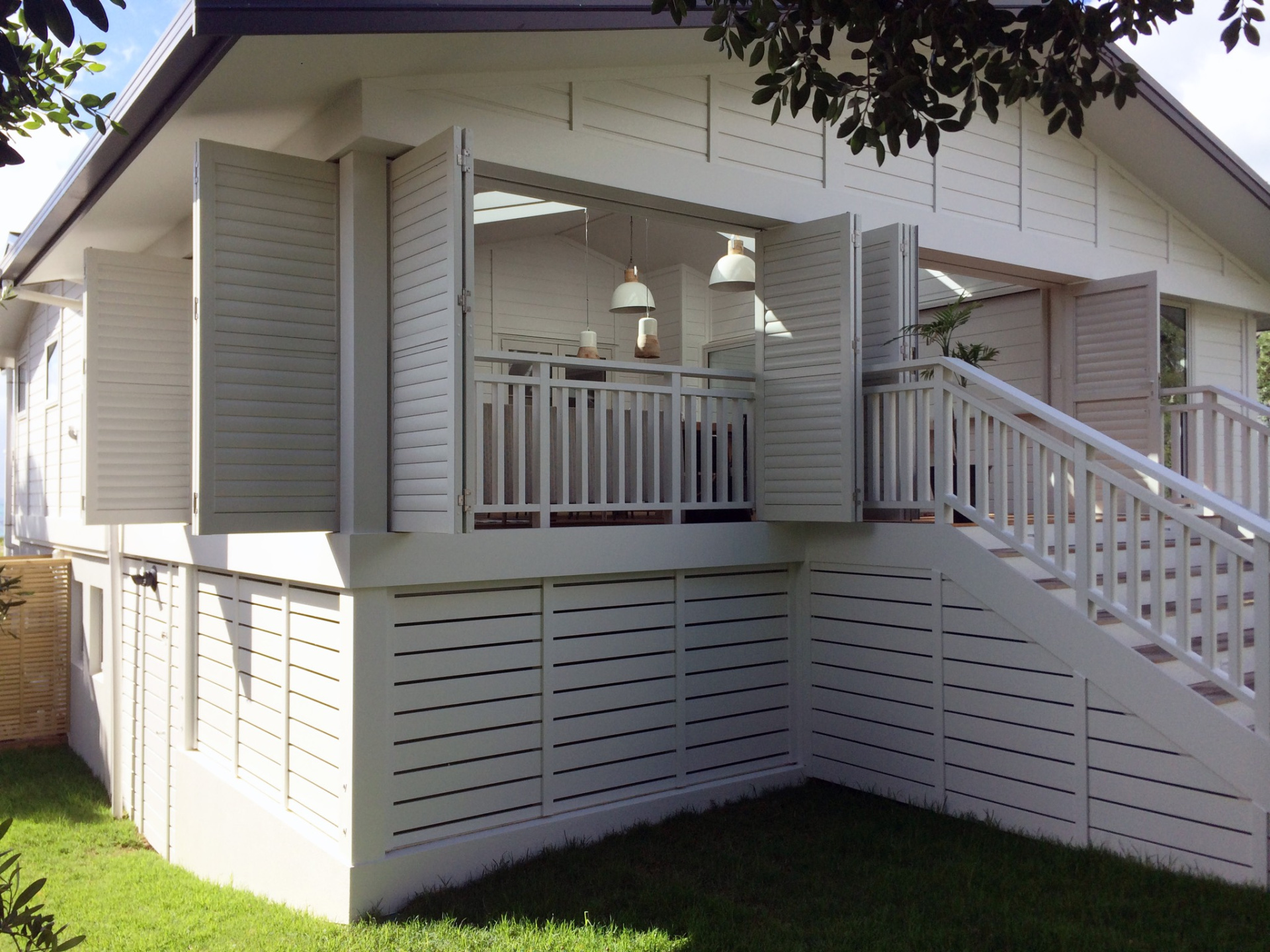
Bifold doors are made up of a series of narrower panels, connected by hinges. When you open them, each panel folds back against the next in a concertina motion, stacking neatly to one or both sides. This lets bifold doors open across almost the entire width, leaving a wide, uninterrupted gap between inside and outside spaces.
That difference in movement shapes almost everything else about the two door types. It’s why sliding doors tend to suit spaces where you want to maintain an uninterrupted view when the door’s shut, and why bifold doors suit spaces where a full, open-air connection is more important.
Sliding Doors
Let’s take a look at sliding doors to see how they’ll fit within your space:
- Simplicity. Fewer moving parts and hinge points.
- Can be more budget-friendly than bifold doors, due to a simpler track and panel design.
- No extra clearance needed for stacking panels, making them a solid fit for smaller decks, courtyards, or homes with limited outdoor space.
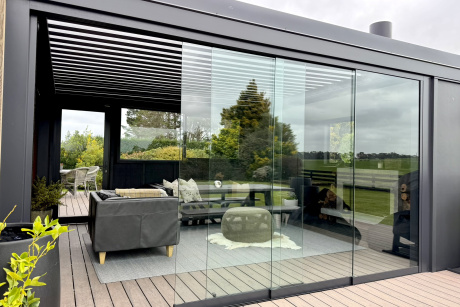
- Frameless Glass options like our Slidetec Frameless Glass Sliding Door are available; they remove the frame between panels almost entirely so the glass itself becomes the feature.
- Sliding doors don’t open as wide as bifold doors, since part of the doorway usually stays covered by the fixed panel. A completely unobstructed opening typically requires a stacking design.
Bifold Doors
Let’s take a look at Bifold doors:
- Open across almost the entire width of the doorway, giving you the widest possible connection between your indoor and outdoor spaces.
- Create a fully unobstructed opening once folded back, great for entertaining or spaces that rely on true indoor-outdoor flow.
- Configurable across a wide range of panel counts, so they can be sized to suit anything from a modest opening to a full wall of glass.
- Can be designed with a single access panel, so you don’t need to open the entire door just to walk through.
- Suits homes where the visual impact of a wide, glass-panelled opening is a design priority.
- Bifold doors need clear space to one or both sides for the folded panels to stack.
- Can cost more to install than a standard sliding door, due to the additional hinges, panels, and hardware involved.
- Can be slightly slower to open and close fully than a single sliding action.
Which is Better, Bifold or Sliding Doors? A Side-by-Side Comparison
There’s no single answer to which is better, bifold or sliding doors; it comes down to your space, budget, and what you want out of your door. Here’s how the two options look side by side.
| Sliding Doors | Bifold Doors | |
|---|---|---|
| Opening Width | Around half to two-thirds of the total width | Up to almost the full width |
| View When Closed | Larger panels of adjustable Louvre infills | More visible frame lines between panels |
| Space Needed to Open | Minimal; panels stay within the track | Needs space to one or both sides for stacking |
| Typical Cost | Typically more economical | Can cost more than sliding doors due to hinges and additional hardware |
| Best Suited to | Smaller decks, courtyards, and tighter sites | Wide openings, entertaining spaces, and feature walls |
| Operation | Single sliding action | Multiple folding panels; can take longer with higher panel counts. |
How to Choose Between Bifold and Sliding Doors
If you’re still wondering how to choose between bifold and sliding doors, considering your space and priority will make it simpler.
- How much space do you have for the door to open into or stack against? Tighter decks tend to suit sliding doors, while bifold doors need clear space along the stacking side.
- How exposed is your site to wind and weather? Coastal and higher-wind zones often call for a door that’s been specified to suit those conditions. It’s worth discussing your exact site with a specialist rather than assuming one door performs better everywhere.
- What’s the door’s main job? If entertaining and open-air access are important, it’s worth considering which option makes for the best indoor-outdoor flow in your specific space.
- What’s your budget for the project? Sliding doors are generally the more cost-effective option, while bifold doors can be slightly more due to the additional components involved.
Once you’re clear on these questions, you’ll have a better picture of which door type actually fits your home and lifestyle. For a lot of homes, a sliding door ends up being the most practical choice: the simpler track design stops them from entering into your outdoor space.
Frequently Asked Questions
Are bifold doors more expensive than sliding doors?
▼
Bifold doors can be more expensive, as they require more hinges, panels, and hardware to fold and stack correctly. Sliding doors use a simpler track system and can therefore be the more affordable option for a similarly sized opening.
Do bifold doors let in more airflow than sliding doors?
▼
When fully open, bifolds expose almost the entire width of the doorway, so they can let in more airflow than a single sliding door opened to its usual half or two-thirds width. That said, Louvretec Sliding Doors feature adjustable Louvre infills to boost ventilation without opening the whole door.
Can sliding doors open as wide as bifold doors?
▼
Not typically, as a standard sliding door leaves part of the doorway covered by a fixed panel. Stacking sliding doors can open wider, sometimes sliding into a wall cavity or over an exterior wall, but when it comes to sliding doors vs bifold doors, a bifold will usually always open across more of the total width.
Which door type is more weather resistant in high-wind areas?
▼
It really depends on your specific site, not the type of door alone. Wind exposure, coastal proximity, and the surrounding structure all affect how a door performs, so it’s worth having your site assessed rather than assuming one option is automatically better suited to withstand wind.
Get Expert Advice for Your Project
The right door for your home comes down to your space, your priorities, and the conditions your site faces. A quick chat with a professional who can look at your specific project will save you from guessing which are the best Louvre doors for indoor-outdoor flow for your home.
Our Louvretec team works with homeowners and specifiers across New Zealand to match the right door and the right outdoor setup to your site. If you’re ready to explore your options, enquire today, and we’ll help you find the best fit for your home.